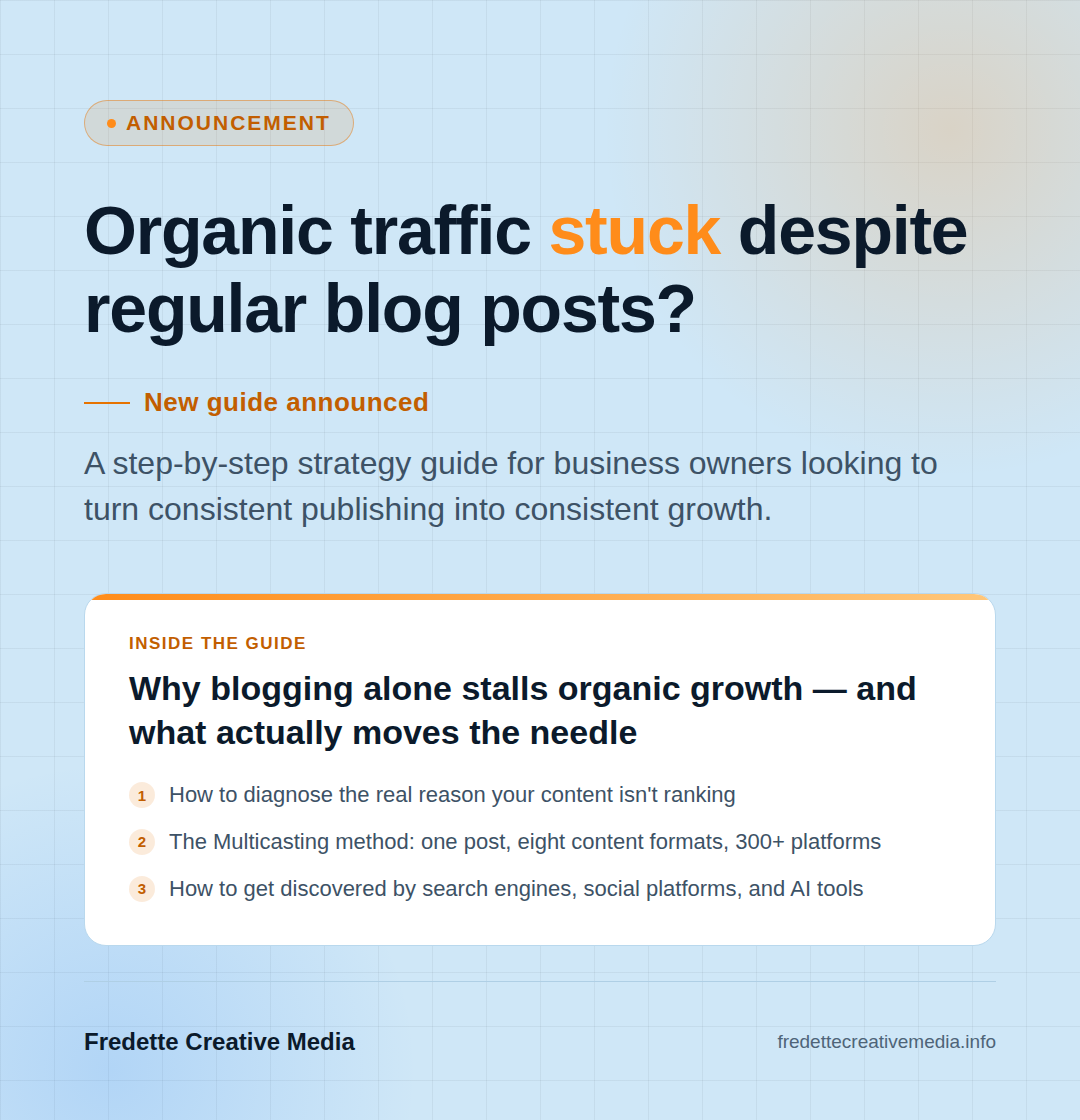
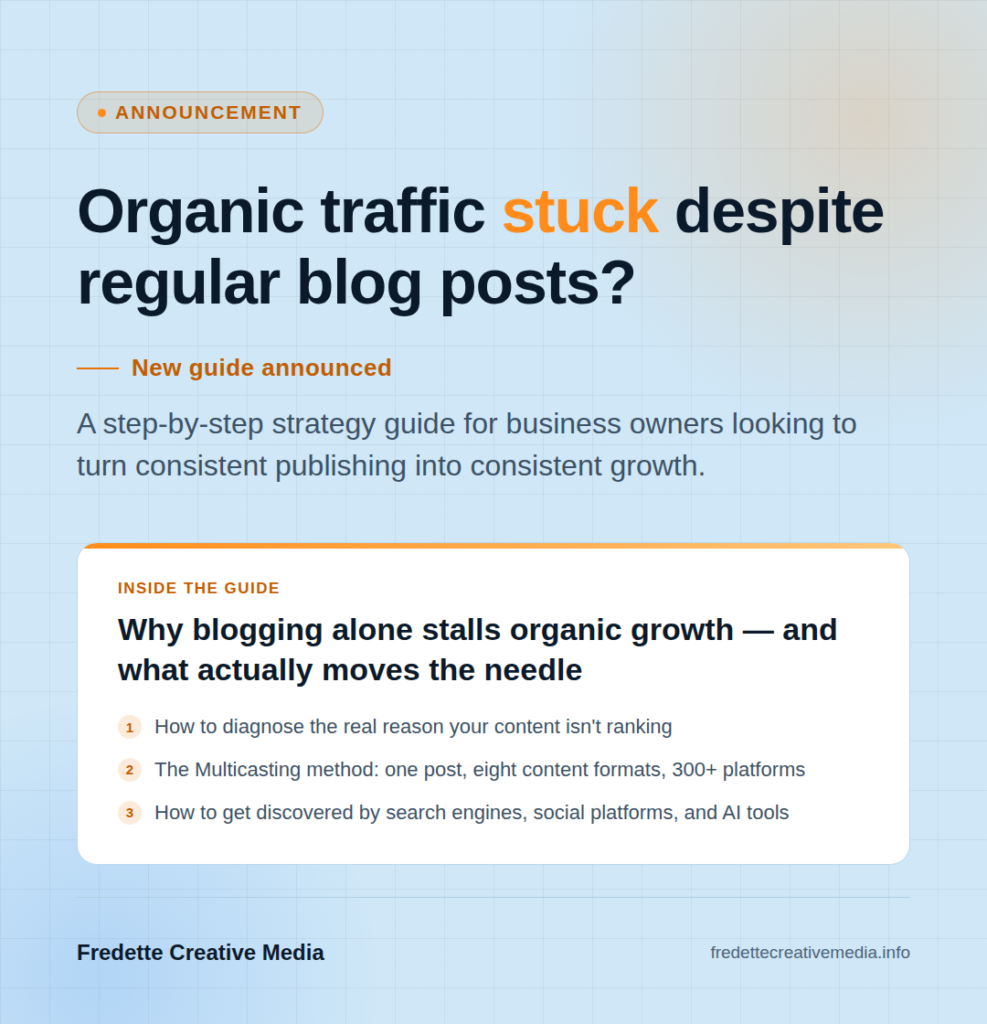
You’re publishing more content, but organic traffic won’t budge. The problem isn’t volume: it’s that your pages don’t match what searchers actually want. One documented case fixed this and saw traffic jump 500% in six months without building a single new backlink.
Key Takeaways
- Publishing more content does not guarantee more organic traffic – what the content does matters far more than how much of it exists.
- A mismatch between what a user is searching for and what a page actually delivers is one of the most common – and most overlooked – causes of stagnant or declining rankings.
- Google’s algorithm actively evaluates whether content satisfies the intent behind a query, and pages that fail this test lose visibility regardless of word count or backlinks.
- Realigning existing content to match true search intent can produce dramatic results – with documented cases showing traffic increases exceeding 500% within six months, achieved without building new backlinks.
- Technical SEO gaps, outdated content, and keyword cannibalization compound the problem – diagnosing which issue is actually driving the drop is the critical first step.
Organic traffic should grow over time. When it stagnates – or slides backward – while a content calendar keeps getting filled, something is fundamentally broken in the strategy. Most of the time, the answer is not to publish more. The answer is to look carefully at what is being published, and why it is not connecting.
More Content, Less Traffic – Here’s Why
One of the most frustrating experiences in digital marketing: the blog is active, new articles go out regularly, and yet Google Analytics tells a grim story. Traffic is flat. Rankings are slipping. Nothing seems to move.
The instinct is to blame the algorithm, the competition, or some mysterious update. But the more common culprit is something far more fixable – a disconnect between the content being produced and the actual reason people are searching. Search engines are not simply cataloging words on a page. They are trying to match a person’s intent with the most satisfying answer. When content misses that mark, it quietly bleeds visibility, no matter how well-written it is.
Understanding why that gap forms – and how to close it – is what separates stagnant sites from those that compound their traffic month over month. Fredette Creative Media covers exactly this kind of strategic content problem at fredettecreativemedia.info.
What Search Intent Mismatch Actually Means
Search intent is the reason behind a query – the real goal a person has when they type something into Google. It goes beyond the words themselves; it is about what outcome the searcher is hoping for. A page that targets a keyword without addressing that underlying goal has a search intent mismatch, and Google is very good at detecting it.
The Four Intent Types SEO Professionals Use
SEO professionals commonly categorize searches into four broad intent types, which align with Google’s underlying evaluation principles. Each type requires a completely different content response:
- Informational – The user wants to learn something. (How does search intent affect SEO?)
- Navigational – The user wants to find a specific website or page. (Google Search Console login)
- Commercial – The user is researching before a purchase decision. (Best SEO tools for small business)
- Transactional – The user is ready to act. (Hire an SEO consultant)
Serving informational content to someone with transactional intent – or a sales pitch to someone just trying to learn – creates an instant mismatch. The visitor leaves. Google notices. Rankings fall.
Why Even Top-Ranking Pages Can Fail
A page can earn a top-three position and still suffer from intent mismatch. High-quality content may fail to sustain rankings if it is too generic or does not clearly address the specific query it targets. In those cases, bounce rates can be high, often exceeding 70% – visitors arrive, sense the page is not what they needed, and return to the search results immediately. That behavior is an indicator of poor relevance that feeds into broader engagement signals Google evaluates, contributing to rank loss over time.
How Google Penalizes the Mismatch
BERT and the Helpful Content Update Rewrote the Rules
Google’s 2019 BERT update was a turning point. For the first time, the algorithm could interpret the context of natural language queries with meaningful accuracy – understanding not just what words were present, but what a searcher actually meant. The Helpful Content Update in 2022 pushed further, explicitly rewarding content that satisfies real user needs and treating content created primarily for search engines as a negative quality signal.
Google’s core updates since have continued in the same direction, each one refining the system’s ability to check intent alignment before evaluating other quality signals. A page that does not answer the real question behind the query is increasingly unlikely to earn or hold a competitive position.
Pogo-Sticking, Dwell Time, and the User Signals That Hurt Rankings
The behavioral data tells the story Google’s algorithm weighs most closely. Pages with a search intent mismatch can see bounce rates exceeding 70%, while intent-aligned content keeps visitors engaged three to four times longer. When users pogo-stick – clicking a result, sensing it is wrong, and returning to the search results page – that pattern is a strong indicator of poor relevance at scale. Lower dwell time and reduced click-through rates compound the damage, accelerating rank loss over time.
Other Culprits Behind Stagnant Traffic
Search intent mismatch is the primary driver, but it rarely operates alone. Several other issues tend to compound the problem.
Outdated Content
Pages that once ranked well can lose ground as the information on them becomes stale. Competitors update their coverage, industry facts shift, and Google’s freshness signals begin to favor newer, more thorough treatments of the same topic. A page does not have to be factually wrong to hurt rankings – it just needs to be less useful than the alternatives.
Technical SEO Gaps
Indexing errors, slow page speeds, broken internal links, mobile optimization problems, and duplicate content can all suppress rankings independent of content quality. If Google’s crawlers cannot efficiently access and understand a page, even perfectly-aligned content will not perform. These issues are often invisible to site owners but clearly visible in a Google Search Console audit.
Keyword Cannibalization
Publishing multiple pages targeting the same keyword splits authority and confuses search engines about which page should rank. Instead of one strong page rising, two weaker ones compete against each other – and sometimes neither wins. Consolidating or differentiating cannibalizing pages is frequently one of the highest-leverage fixes available.
How to Diagnose Your Traffic Drop
Google Search Console Red Flags
Google Search Console is the first place to look when traffic drops. Comparing performance data across date ranges reveals shifts in clicks, impressions, average position, and click-through rate. A sudden drop in impressions can indicate a ranking or indexing issue, though Google Search Console data changes – such as data cleanup events – have also caused impression drops that coincided with improved average position, without any actual ranking loss. A drop in click-through rate with stable impressions often points to a content-to-intent mismatch: the page is still appearing, but users are not choosing it.
Identifying Which Pages Lost Ground
Not every traffic drop is site-wide. Often a handful of pages – sometimes just one or two – account for the majority of the decline. Sorting pages by traffic change in Search Console quickly isolates the problem. From there, the diagnostic questions become specific: Has the search intent for that keyword shifted? Has a competitor published a stronger resource? Is the page outdated? Are there technical errors preventing proper indexing? Answering those questions – rather than immediately creating new content – is what turns a traffic investigation into an actual recovery plan.
Realigning Content to Intent Can Unlock Dramatic Growth
The upside of an intent mismatch is that it is fixable – often without building a single new backlink or creating any new pages. Documented SEO cases have shown that realigning existing content to match actual search intent can produce traffic increases exceeding 500% within six months, with the work focused entirely on what was already on the site.
Intent alignment improves more than rankings. Content that genuinely answers what a visitor was looking for increases engagement, reduces bounce rates, and converts far more effectively. Search intent mismatch has been identified as a primary cause of organic conversion problems – even more so than overall traffic quality. Fixing it has a compounding effect across the entire funnel.
Intent-Aligned Content Is the Only Strategy That Compounds
Chasing keyword volume without understanding the intent behind those keywords is a treadmill. Rankings stay flat, traffic stagnates, and the publishing effort produces diminishing returns. The alternative – understanding the actual goal behind a search query and building content that satisfies it completely – creates a compounding advantage.
Intent-aligned pages attract longer visits, earn more engagement signals, and hold rankings more durably. They convert better because they reach people at the right moment in the right way. As those behavioral signals accumulate, Google’s algorithm rewards them with greater visibility over time – which generates more signals, and more visibility in turn. It is not a shortcut. It is the only strategy that actually builds on itself.
For businesses ready to stop guessing and start diagnosing, Fredette Creative Media helps small and medium businesses identify what is really holding their organic traffic back and build content strategies that align with how real searchers think.