
Most small businesses make the same fatal mistake when ad budgets get tight: they cut the experimental 10% of their spending. But industry data from eMarketer and strategies used by Coca-Cola and Google reveal why that’s exactly backward, and what to do instead.
Key Takeaways
- The 70-20-10 rule divides your marketing budget into proven channels (70%), emerging tactics (20%), and experimental ideas (10%) – giving every dollar a purpose.
- eMarketer data shows digital ad spend has grown steadily as a share of total budgets, making smart allocation more critical than ever for small businesses.
- Brands like Coca-Cola and Google have used this framework to protect core revenue while consistently finding new growth channels.
- The single biggest mistake small businesses make with this model is cutting the experimental 10% when budgets get tight – the exact opposite of what they should do.
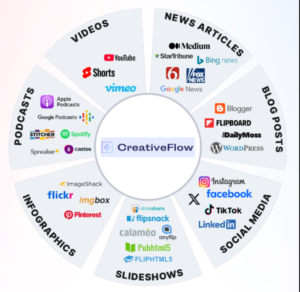
- Fredette Creative Media / Creative Flow helps small businesses advertise smarter through structured, multi-platform organic strategies that support disciplined budget thinking.
Most small business owners cannot afford to waste ad spend. Every dollar needs to pull its weight. The 70-20-10 budget split is a framework that brings discipline and strategy to advertising spend – and when paired with the kind of digital trend data that eMarketer tracks, it becomes a genuinely powerful tool for businesses competing on a tight budget.
Most Small Businesses Overspend on Proven Channels – and Stagnate
There is a familiar trap that catches many small businesses: once something works, they pour everything into it. A Facebook campaign converts well, so the entire budget flows there. An email sequence delivers steady leads, so it becomes the only channel in play. On the surface, that sounds smart. In practice, it quietly kills long-term growth.
Every channel eventually saturates. Audiences shift. Ad costs rise. What worked two years ago starts delivering diminishing returns, and because there has been no investment in anything new, there is nothing waiting to replace it. Marketing researcher Andrew Chen describes this as the law of shitty clickthroughs – the idea that every channel’s effectiveness erodes over time, no matter how strong it was at the start.
The 70-20-10 rule exists specifically to break this cycle. It forces a business to keep innovating even when things are going well – not by abandoning what works, but by deliberately setting aside budget to test what is next. For small businesses trying to stay competitive, that discipline is a survival strategy. Fredette Creative Media / Creative Flow helps small business owners think through smarter ways to structure their advertising efforts at Creative Flow.

What the 70-20-10 Rule Actually Means
The framework is simple on paper. The real skill is in applying it correctly.
70%: Proven Channels That Consistently Deliver
The largest portion of the budget goes to channels with a real track record – six or more months of positive performance data, known unit economics, and the ability to forecast results with reasonable confidence. Think established SEO content, proven paid search campaigns, or email sequences with strong conversion histories. This bucket protects revenue and keeps the business running while the other buckets do their work.
20%: Emerging Tactics Showing Early Promise
The middle bucket is for calculated bets. These are channels or tactics that have shown early positive signals but have not been tested at scale. A new content format that performed well in a handful of tests, or a paid channel showing promising cost-per-lead trends, belongs here. The 20% allocation gives these ideas enough resources to develop a real signal – without risking the core business if they do not pan out.
10%: Experimental Ideas With No Track Record
The smallest bucket is pure innovation. This is where untested hypotheses go – a completely new platform, an unconventional content format, a radically different positioning angle. Most experiments here will fail. That is expected and acceptable. The value is not just in the ideas that succeed; it is in the learning every experiment produces. Without this bucket, a business is always reacting to the market rather than getting ahead of it.
Why This Framework Works for Small Businesses
Protects Core Revenue While Enabling Growth
One of the most common fears small business owners have about trying new marketing tactics is risk. The 70-20-10 model addresses that fear directly. Because 70% of the budget stays locked into proven channels, the business is not gambling its stability on unproven ideas. The core keeps running. Revenue stays stable. And the 30% allocated to emerging and experimental work operates within a defined, managed risk envelope.
This also creates a natural pipeline for ideas to grow. An experiment that shows promise in the 10% bucket can graduate to the 20% bucket and receive more resources. If it continues to perform, it eventually earns a place in the 70%. That movement – from new to emerging to core – is where long-term channel diversification actually happens.
Backed by Brands Like Coca-Cola and Google
The 70-20-10 framework was not invented by small businesses, but it scales down to them well. At Coca-Cola, Jonathan Mildenhall championed the model as part of the company’s Content 2020 strategy – 70% on proven formats, 20% on innovations built from what was working, and 10% on high-risk new ideas. At Google, Eric Schmidt and Jonathan Rosenberg described the same ratio in How Google Works, applying it to engineering resource allocation. Gmail and Google News both emerged from that experimental 10%.
The principle holds regardless of budget size: protect your base, invest in what shows promise, and always leave room for something genuinely new.
What eMarketer Data Reveals About Digital Ad Trends
Digital Ad Spend Has Grown Steadily as a Share of Total Budgets
eMarketer has tracked a consistent shift toward digital advertising over the past decade. A Forrester Research report from 2017 projected that companies would allocate approximately 35% of their marketing budgets to online channels in 2018. Since then, that share has grown considerably, with eMarketer data confirming a sustained upward trend in digital ad spend as a proportion of total marketing investment.
What this means practically is that competition for digital ad space has intensified – and so has the cost of relying entirely on a single channel. As more businesses flood into paid search, social media advertising, and display networks, costs rise and performance erodes. eMarketer’s broader insights into digital budget optimization reinforce exactly why a structured allocation model like 70-20-10 matters: spreading investment intelligently across proven, emerging, and experimental channels is one of the few sustainable edges available to smaller advertisers.
How to Apply the Split to Your Ad Budget
Audit Where Your Budget Actually Goes Today
Before any reallocation happens, there needs to be an honest picture of current spend. Most businesses, when they map their budget against the three buckets, find they are operating at 90% or more in the core category – with almost nothing going toward emerging or experimental channels. That is not necessarily wrong in the short term, but it creates serious long-term vulnerability.
The audit does not need to be complicated. List every active marketing channel and campaign. Assign each one to a bucket based on how much performance data exists and how confident the forecast is. The result is a clear baseline – and usually a clear indication of where the imbalance lies.
Move Winners Up, Cut What’s Declining
The real power of the 70-20-10 model is not in the initial setup – it is in the ongoing movement between buckets. Setting a monthly or quarterly review cycle keeps the framework active. Experiments that show promise move up to the emerging bucket and receive more resources. Emerging channels that prove out earn a place in the core. Core channels that are declining get reduced or cut to free up budget for what is working.
This review cadence also keeps the experimental bucket fresh. Failed experiments get documented – the learning captured – and replaced with new hypotheses. Without this discipline, the 10% bucket can quietly go dormant, which defeats the entire purpose of having it.
The One Mistake That Kills the Whole Model
When budgets tighten – and for small businesses, they inevitably do – the first instinct is to cut the experimental 10%. It feels like the safest place to make cuts because nothing in that bucket is proven yet. That instinct is wrong, and it is the most common way the 70-20-10 model breaks down in practice.
Cutting the experimental budget during a downturn leaves the business entirely dependent on existing channels at exactly the moment those channels are likely getting more expensive and more competitive. Tight times are precisely when finding the next efficient channel matters most. The 10% is not discretionary spending – it is the insurance policy against long-term stagnation. Treat it as non-negotiable, even when other cuts are necessary.
70-20-10 Gives Small Businesses a Smarter Way to Compete
Larger brands have always had the advantage of budget scale. The 70-20-10 framework levels the playing field in one important way: allocation discipline, not total spend. A small business with a $5,000 monthly ad budget can apply the same structural logic as a company spending fifty times that amount.
The U.S. Small Business Administration recommends that small businesses with revenues under $5 million allocate 7-8% of gross revenue to marketing. Reported industry averages for overall marketing spend vary, with figures ranging from roughly 7-10% of revenue depending on the sector and year. Whatever the total number, structuring that spend deliberately – protecting what works, testing what might work next, and always keeping a slice for genuine innovation – is what separates businesses that grow from those that plateau.
The framework does not require a marketing team or a big agency. It requires clarity about what is proven, what is promising, and what is still just an idea – and the discipline to fund all three, consistently.
For more on how structured advertising strategies can work for small businesses, visit Fredette Creative Media, where the team helps brands plan, allocate, and grow their marketing spend more effectively.