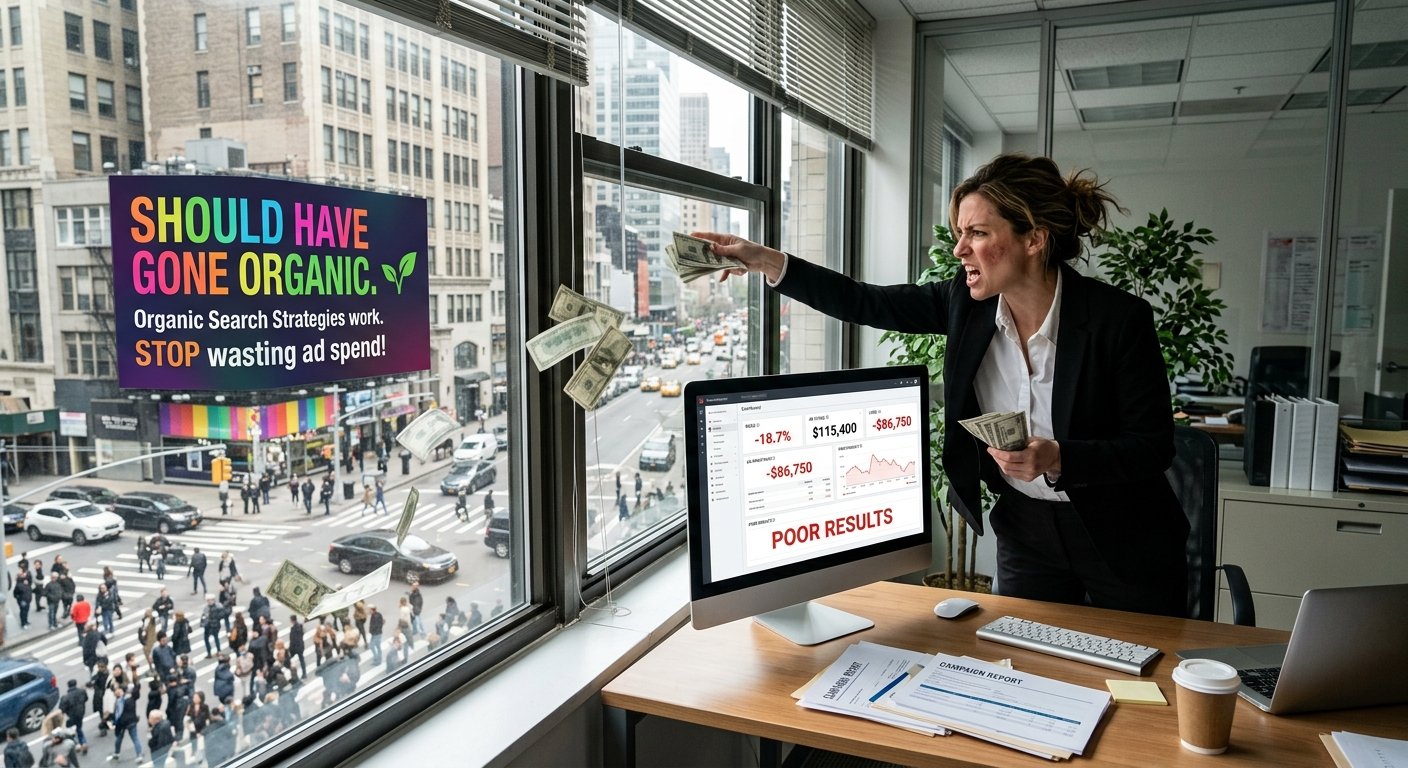
There’s a particular kind of dread familiar to any business owner who’s ever paused a Google Ads campaign: watching the traffic dashboard flat-line within days. It’s not paranoia. Digital Media Stream found that turning off Google Ads triggered a 50 percent drop in overall traffic and a 93 percent collapse in new contacts arriving through direct channels. That’s not a slow fade — that’s a cliff.
The uncomfortable truth behind that number is that most SMBs aren’t actually building anything. They’re renting visibility, one click at a time, and the moment the rent stops, so does the visibility. Paid and organic channels aren’t as separate as marketers like to pretend; pulling ad spend doesn’t just remove paid clicks — it quietly erodes the brand awareness and search volume that organic rankings were leaning on in the first place.
Which raises the obvious question: why are so many small and mid-sized businesses still treating paid media as their only channel, when the data says organic is doing the heavier lifting? Paid search accounts for an estimated 10.2 to 15 percent of total web traffic — a sliver. Most searchers skip the ads entirely and click organic links. Yet organic is the channel that gets the least sustained investment, probably because its payoff isn’t immediate and its ROI doesn’t fit neatly into a weekly ad-spend report.

That gap is what Fredette Creative Media / Creative Flow is pointing at with its new guide and its Multicasting Publication strategy — an approach built around the idea that organic traffic has a fundamentally different economic profile than paid: once the content and rankings exist, they keep working without a recurring media buy. Whether that particular product is the right fit for a given business is a separate question, but the underlying diagnosis is hard to argue with. An asset that keeps producing after you stop paying for it is worth more, dollar for dollar, than one that switches off the moment the budget does.
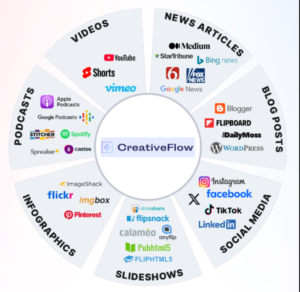
The company’s pitch — one done-for-you campaign a month, repackaged into eight content formats (news article, blog post, long-form video, short-form video, podcast episode, infographic, flipbook, social posts) and pushed out to hundreds of platforms — is essentially a bet that distribution breadth compounds the same way ad spend used to. They call the resulting pattern the Creative Flow Effect: show up everywhere long enough, and search and social algorithms start rewarding the brands that already look established. At $997/month (half the standard $1,998 rate), it’s positioned less as a replacement for paid ads and more as a way to stop being fully dependent on them.
The larger point stands regardless of which vendor a business chooses: if your traffic disappears the instant you stop paying for it, you never actually built anything — you were just borrowing attention. The guide and strategy are available at fredettecreativemedia.info for owners who want to see what building the alternative looks like.